
How to Choose Puppy Food: 5 Things to Check Before Buying
When bringing a new puppy home, you probably find yourself standing in front of endless shelves of kibble, every single bag claiming to be "highly nutritious" or "great for digestion," leaving you unsure of what to trust. Don't worry—you don't need to be a pet nutritionist. Knowing how to choose puppy food by checking 5 small details right on the label is enough to avoid most common troubles like diarrhea, picky eating, or stunted growth.
Quick Summary: How to Choose Puppy Food
When selecting food for your puppy, verify these 5 label details:
- Packaging Indicator: Look for "Puppy" or "All Life Stages."
- Breed Size Match: Suited for your puppy's breed size (small, medium, or large).
- Specific Animal Protein Source: A named animal protein (chicken, salmon, beef, etc.) listed at the top of the ingredients.
- Nutritional Standards: Complies with AAFCO or FEDIAF growth standards, featuring a minimum of
 protein and
 fat (on a dry matter basis).
- Kibble Size & Texture: Small, moderately firm kibbles that are easy to chew.
When switching to a new diet, transition gradually over 7–10 days to allow your puppy's stomach time to adjust.
Why Do Puppies Need Specialized Food Instead of Adult Dog Food?
Puppy food is a complete diet specifically formulated for the growth phase, containing higher levels of protein, energy, calcium, and phosphorus than adult dog food. The reason is simple: puppies grow rapidly and require far more "building blocks" per portion of food.

The numbers clearly highlight the difference: according to AAFCO (Association of American Feed Control Officials) nutritional profiles, food for growth requires a minimum of protein, whereas adult dog maintenance food requires only  minimum (on a dry matter basis).
Three key nutrient groups puppies need in higher amounts:
- Protein: Builds muscles, tissues, and a strong immune system.
- Fat (Energy): Puppies play all day and need concentrated energy sources, balanced carefully to prevent obesity.
- Calcium, Phosphorus, & Minerals: Support healthy bone and joint development.
5 Things to Check When Choosing Puppy Food
Check 1: Correct Life Stage
Suitable puppy food is clearly labeled "Puppy," "For Growth," or "All Life Stages." "All Life Stages" formulas are suitable because their nutritional profile meets growth requirements.
Avoid feeding your puppy food labeled strictly "Adult," even if you already have it at home or it is more affordable.
Check 2: Correct Breed Size
Small, medium, and large breed puppies do not grow at the same rate and require slightly different diets:
- Small Breeds (Poodle, Chihuahua, Pomeranian): Mature early; need energy-dense formulas and tiny, easy-to-chew kibble.
- Medium Breeds (Corgi, Beagle, Standard Poodle): Standard puppy kibble works wonderfully.
- Large & Giant Breeds (Golden Retriever, Labrador, Husky, German Shepherd, Great Dane): Choose large breed puppy formulas. Excessive calcium or calorie intake causes large puppies to grow too fast, predisposing them to developmental orthopedic diseases. AAFCO standards limit calcium to a maximum of
 for large breed puppy foods.
Rule of thumb: Large breed puppies need to grow steadily, not rapidly.
Check 3: Named Protein Source at the Top of the Ingredients List
Ingredients are ordered by weight in descending order, meaning the first ingredient represents the largest proportion. Prioritize named animal proteins at the top, such as "Chicken," "Salmon," or "Beef," rather than vague terms like "Meat By-Products" or "Cereal Meal."
Label Reading Tip: If a single grain type is split under multiple names (e.g., "Corn Meal," "Corn Gluten," "Corn Bran"), the actual total grain content might be higher than it initially appears.
Check 4: Meets Recognized Nutritional Standards
Quality puppy food explicitly states compliance with AAFCO or FEDIAF (European Pet Food Industry Federation) growth standards and includes a "Guaranteed Analysis" panel on the bag. According to AAFCO, minimum values for puppies (dry matter basis) are:
Nutrient | Minimum Puppy Requirement | Primary Role |
Crude Protein |
| Builds muscle, tissue, and immunity |
Crude Fat |
| Delivers concentrated energy |
Calcium |
| Supports bone development |
Phosphorus |
| Supports bone and joint health |


Important Note: Package values represent as-fed amounts (including moisture) and appear lower than dry matter figures—especially in wet food. Furthermore, calcium and phosphorus must remain balanced (around 1:1 to 2:1 ratio); avoid adding calcium supplements if feeding a complete commercial puppy food.
Check 5: Kibble Form and Size
Weaned puppies have tiny teeth and sensitive digestion, requiring small kibbles with moderate firmness:
- For puppies under 3 months, soak dry kibble in warm water to soften it.
- Small breed puppies need smaller kibble pieces than large breeds to ease chewing and prevent choking.
- Wet food (pate) is appealing for picky eaters, but should serve as a topper or secondary meal, stored in the refrigerator after opening.
Quick Comparison Checklist Before Buying
You can screenshot this table to cross-check labels right at the store:
Check Item | Ideal Label Finding | Reconsider If |
Life Stage | States "Puppy," "Growth," or "All Life Stages" | States only "Adult" |
Breed Size | Specifies small, medium, or large breed | Omits breed size specifications (for large pups) |
Protein Source | Specific meat/fish listed first | Grains or "By-products" listed first |
Nutritional Standards | AAFCO or FEDIAF growth standard statement | Lacks guaranteed analysis details |
Kibble Shape & Size | Small, moderately soft, easy-to-chew kibble | Large, hard kibbles for small or under-3-month pups |
3 Common Mistakes When Choosing Puppy Food
- Buying Based on Price or Advertising Claims: High price doesn't guarantee a good match, and affordable options aren't necessarily poor. Trust ingredient lists and nutritional standards over marketing terms like "natural" or "premium."
- Switching Diets Abruptly: A puppy's stomach is delicate; switching food instantly in a single meal easily causes vomiting and diarrhea.
- Feeding Table Scraps / Human Food: Besides causing dietary imbalances and meal refusal, human items like chocolate, onions, garlic, and raisins are toxic to dogs.
How to Transition to a New Food Over 7–10 Days
Safely transition puppy food by mixing increasing proportions of the new diet into the old food over 7–10 days according to this schedule:
Stage (Days) | Old Food | New Food |
Days 1–3 |
|
|
Days 4–6 |
|
|
Days 7–9 |
|
|
Day 10 Onward |
|
|


If your puppy develops loose stools or refuses food, step back to the previous ratio for a few additional days. If symptoms persist past 24–48 hours or the puppy becomes lethargic, consult a veterinarian immediately.
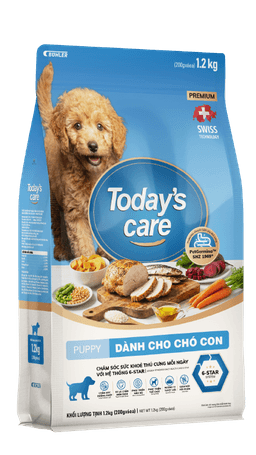
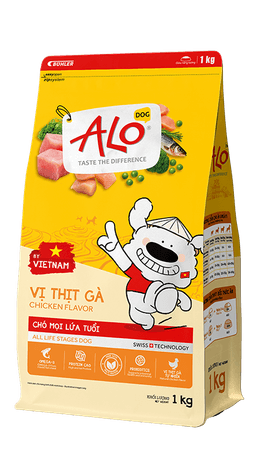
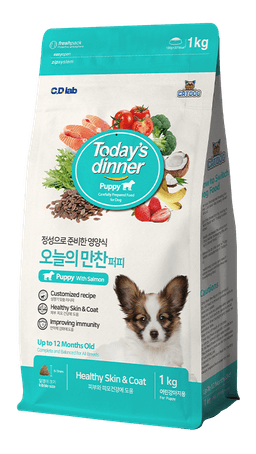
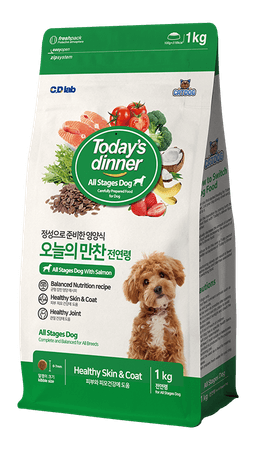
Puppy Kibble Recommendations Available at Fusion Group
Because every puppy varies in age, breed size, and digestive sensitivity, no single kibble fits all. Match your puppy's group in the table below to select the right product:
Criteria | Today's Dinner (All Life Stages 1kg) | Today's Dinner (Puppy 1kg) | ALO Dog (Chicken Flavor 1kg) | Today's Care (Puppy 1.2kg) |
Target Age | From 3 months onward | From 3–12 months | From 3 months onward | From 2–12 months |
Suitable Breed | All breed sizes | Small/All breeds | All breed sizes | Small/All breeds |
Protein Source | Poultry meat | Chicken | Salmon | Chicken & Hydrolyzed Shrimp |
Nutritional Values | Protein | Protein | Protein | Protein |
Kibble Size | Round kibble | Round ~ 6.0–7.0mm | Round ~ 6.0–7.0mm | Round ~ 6.6–7.0mm |
 , Fat

 , Fat

 , Fat

 , Fat

Frequently Asked Questions About Puppy Food
At how many months can a puppy eat dry kibble?
Puppies can start exploring solid food around 3–4 weeks of age using warm water-softened kibble. By 8 weeks old, most puppies comfortably chew small dry kibble. If weaning, consult your vet for guidance.
Can puppies eat adult dog food?
Puppies should not eat adult dog food long-term because it lacks the necessary protein and mineral density required for growth. AAFCO requires growth diets to contain at least protein compared to for adult maintenance (dry matter basis).
Should I mix dry kibble with wet pate for my puppy?
Yes, provided both the kibble and wet pate are complete diets formulated for puppies. This enhances appetite for picky puppies, but remember to calculate total daily calories to prevent overfeeding.
When should I transition my puppy to adult dog food?
Transition timing depends on breed size. Small breeds mature early (around 9–12 months), while giant breeds may require puppy nutrition until 18–24 months. Use the 7–10 day transition schedule when changing diets.
What should I do if my puppy stops eating?
First, check for common triggers: recent food changes, teething, environmental shifts, or excessive treat consumption. If food refusal lasts past 24 hours or is accompanied by vomiting, diarrhea, or lethargy, seek veterinary care immediately, as puppies dehydrate and experience hypoglycemia rapidly.
Final Thoughts
Learning how to choose puppy food is straightforward when you remember 5 core checks: correct age, suitable breed size, named protein sources, certified nutrition standards, and appropriately sized kibble. Use our checklist when shopping and transition diets gradually over 7–10 days for smooth digestion and healthy growth!

L-Lysine for Cats: Benefits, Uses & How to Supplement It Safely

Today's dinner: Nutritionally Balanced Kibble for Dogs and Cats

Cat Food: The Definitive Guide to Choosing Dry Kibble

Puppy Food: 7 Key Tips for Choosing the Right Kibble for Your Pup

Hairball Control Cat Food and How to Reduce Hairballs Effectively
FINE Pet Food: Safe for Dogs & Cats, Allergy-Friendly
Is Organic Dog Food Good for Dogs? What You Need to Know
Dog Food: What to Consider When Choosing
What Can and Can’t Cats Eat? A Must-Know List for Cat Owners

Is Catsrang Cat Food Good?
Probiotics for Cats: Prebiotics, FOS, and How to Choose Cat Kibble

Omega-3 for Cats: Benefits, How to Choose, and Recommended Products

Wonder Cats Products and Prices: A Dry Cat Food Guide

Taurine For Cats: Role, Requirements & How To Supplement It Correctly

How Much Dry Food Should You Feed Your Cat? Feeding Portions by Weight
How to Choose Cat Kibble: 7 Key Criteria and How to Read Labels
Food for Cats with Kidney Disease

Wonder Cats Review: Is Wonder Cats Dry Cat Food Good for Cats?
