
Signs Of Allergic Dermatitis In Dogs: How to Choose the Right Food
If your dog scratches constantly, licks their paws until the skin turns red, loses hair or keeps getting ear infections, they may have a skin allergy. Besides taking your dog to the vet to find the cause, you should choose a suitable dog food for allergies to help manage the condition. This article helps you recognize the signs and choose the right kibble.
Quick Summary
- Signs: itching, scratching, paw licking, red skin, hair loss, and recurring ear infections or skin infections.
- Identifying a food allergy: an elimination diet of at least 8 weeks under your vet’s guidance, followed by re-introducing the old food to confirm.
- Suitable kibble: hydrolyzed protein or novel protein (a protein your dog has never eaten), a short ingredient list, and a clear origin.
What Are the Signs of Skin Allergies in Dogs?
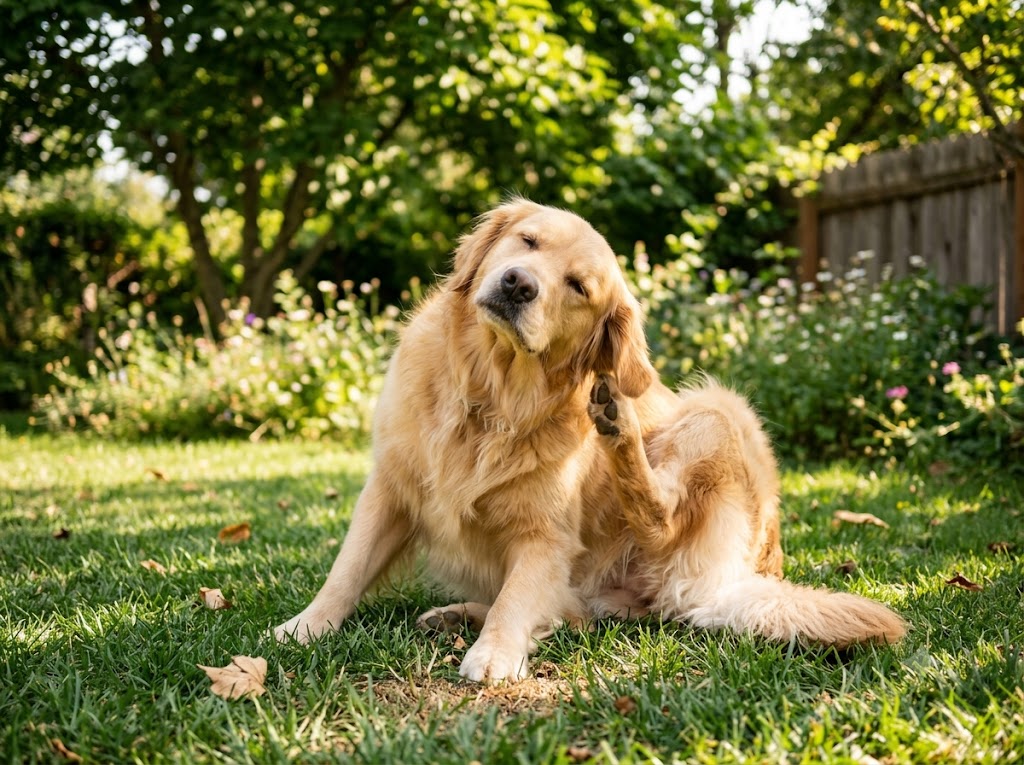
Dogs with food allergies usually itch around the face, ears, paws and belly, and the itching lasts all year rather than following the seasons. You may notice:
- Itching: scratching, rubbing the body on the floor, and constantly licking or chewing the paws.
- Skin: redness, hair loss, scratches, and over time, thickened and darkened skin.
- Ears: ear infections, excessive earwax, and repeated recurrences.
- Digestion: occasional loose stools and licking around the anus.
What Are the Common Causes of Itchy Skin in Dogs?
Itchy skin in dogs usually comes from three groups of causes, and the symptoms look quite similar:
Cause | Common itch location | How to recognize it |
Fleas | Rear half of the body, base of the tail | Sudden onset; fleas or flea dirt are visible |
Environment | Paws, armpits, belly, face, ears | May worsen seasonally; diagnosed by elimination |
Food | Face, ears, paws, belly | Year-round itching, possibly with loose stools or ear infections |
A review of studies in BMC Veterinary Research found that the rate of food reactions in itchy dogs ranges from about 9% to 40%, depending on the study. So take your dog to the vet if the itching lasts more than 1 to 2 weeks, the skin is scratched or oozing, or ear infections keep coming back, so the vet can rule out fleas, fungus and bacteria first.
How to Choose Kibble for Dogs with Skin Allergies
Kibble for allergic dogs uses protein sources that are easier on your dog’s body, so they are less likely to react. There are usually two types: hydrolyzed protein and novel protein. This kind of kibble helps find out whether your dog has a food allergy. It is not an ordinary kibble meant for every dog.
Kibble type | How it works | Notes |
Hydrolyzed protein | Protein is broken into small pieces so the immune system is less likely to recognize it | Suitable when it is hard to know which proteins your dog has eaten; often preferred in elimination diets |
Novel protein | Uses a protein your dog has never eaten | A truly “novel” protein is hard to find, and over-the-counter kibble may contain unexpected proteins |
Regular kibble | Standard formula | Not designed to rule out allergies; “grain-free” kibble is not automatically suitable for allergic dogs |
How Do You Find Out Which Food a Dog Is Allergic To? Try an Elimination Diet
An elimination diet means feeding your dog only one special kibble for 8 weeks, with nothing else, to see whether the itching improves. You then feed the old food again. If the itching returns, the old food is the culprit. This is the most reliable way to know whether your dog has a food allergy. Follow these 4 steps, ideally with your vet’s support:
- Take your dog to the vet to rule out other causes such as fleas, mange, fungus and bacteria.
- Feed only hydrolyzed protein or novel protein kibble for at least 8 weeks. Do not give extra snacks, bones or human food, because even a small amount can skew the results. After 8 weeks, more than 90% of dogs with food allergies have their symptoms disappear or improve markedly.
- Each week, record how much your dog itches and how their skin and stools look (take photos if possible).
- Feed the old food again to confirm. If the itching returns (this can take from a few hours to 14 days), the old food is the culprit.
When switching kibble, mix the new food in gradually over about 7 days so your dog’s stomach has time to adjust.
Kibble Suggestions for Dogs with Skin Allergies
Below are kibble lines you can consider for a dog with skin allergies, ordered by how well they fit this condition. Use them under your vet’s guidance:
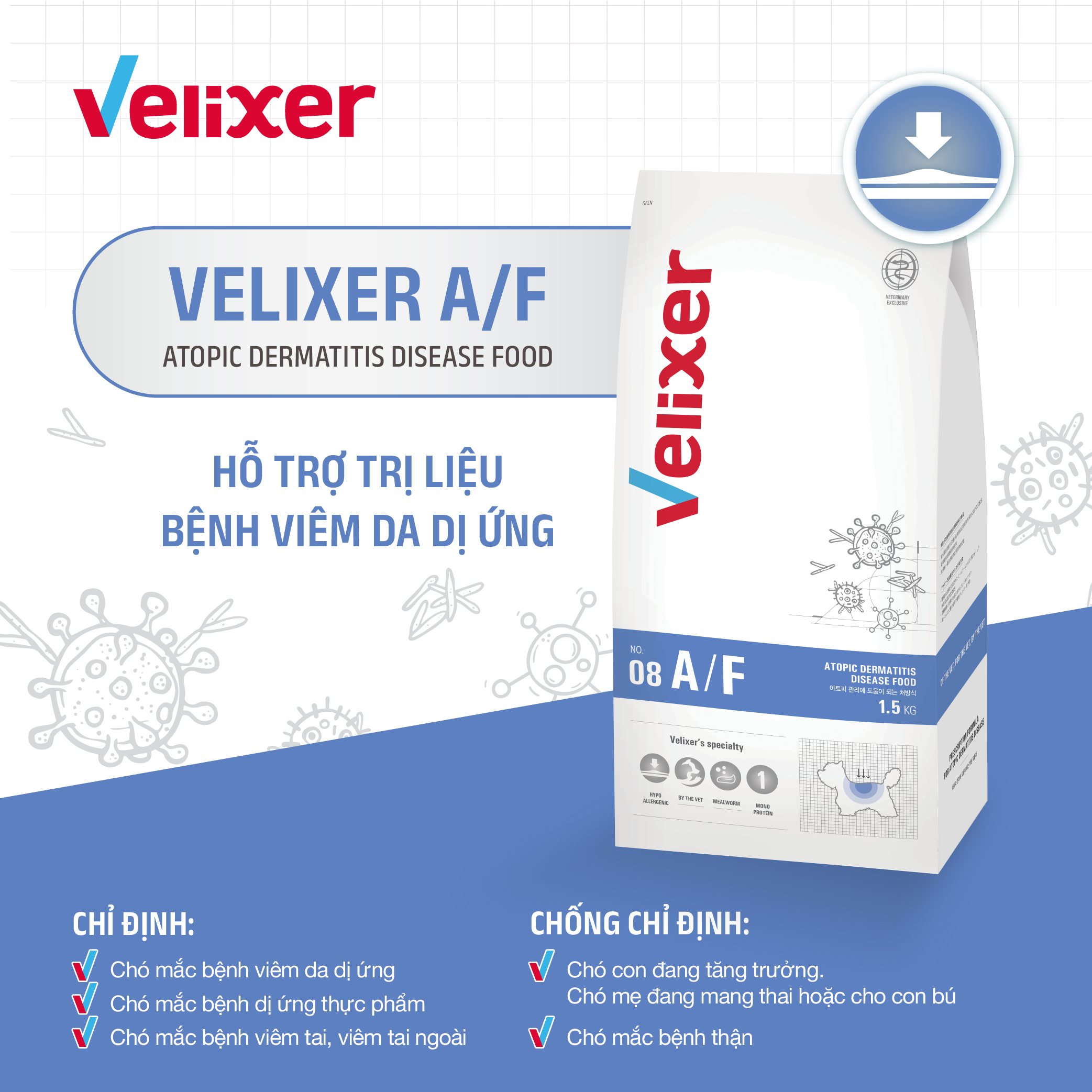
- Velixer A/F: Suitable for dogs with allergic dermatitis, as support for managing the condition. Adds DHA and EPA (omega-3) to help restore and care for the skin, along with herbs that support the immune system.
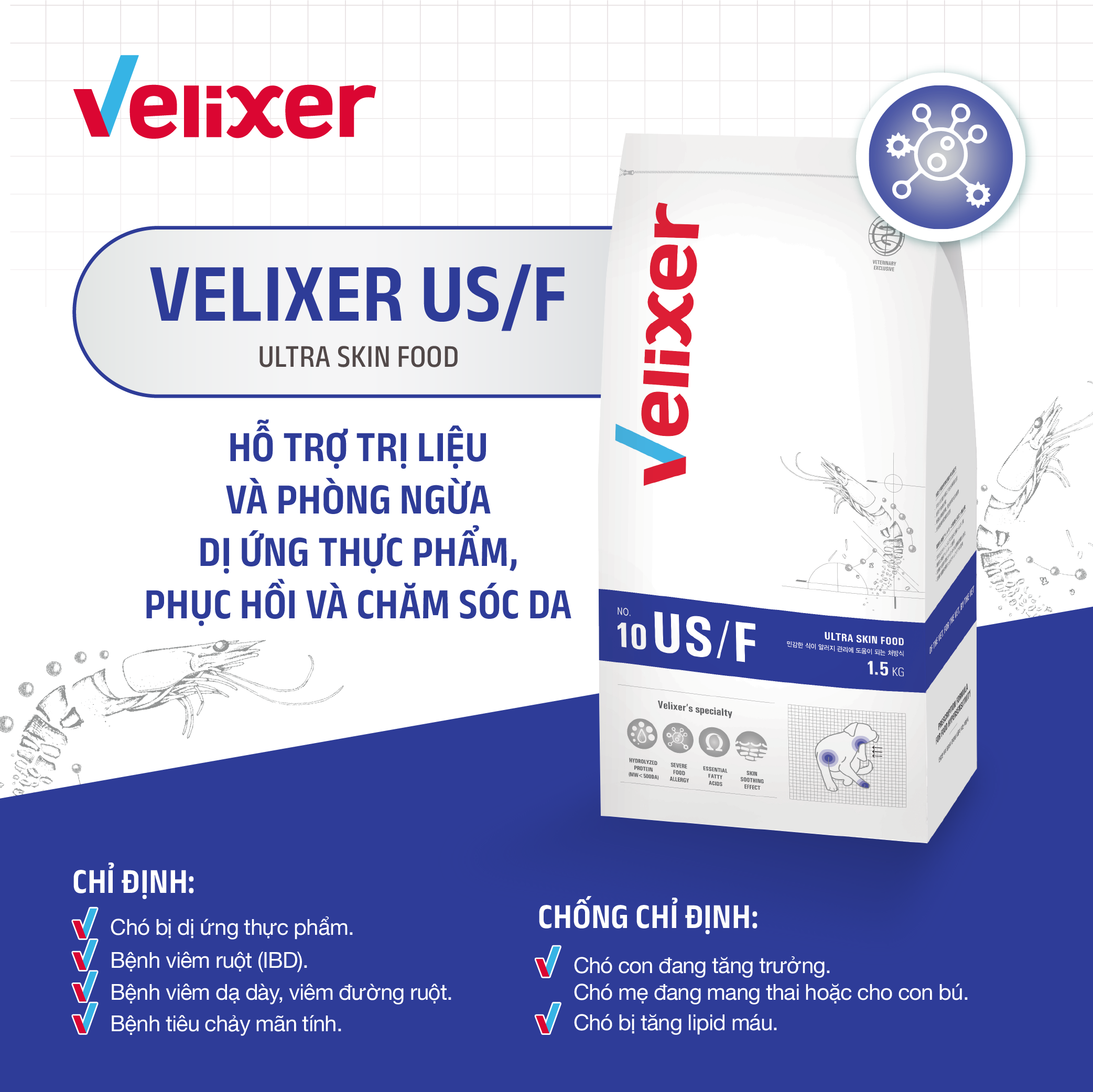
- Velixer US/F: Suitable for dogs suspected of having food allergies and needing skin care. Uses hydrolyzed protein (protein broken into small pieces) to reduce the chance that the immune system recognizes the allergenic protein, making it suitable for dogs with food allergies. Supports skin recovery and care.
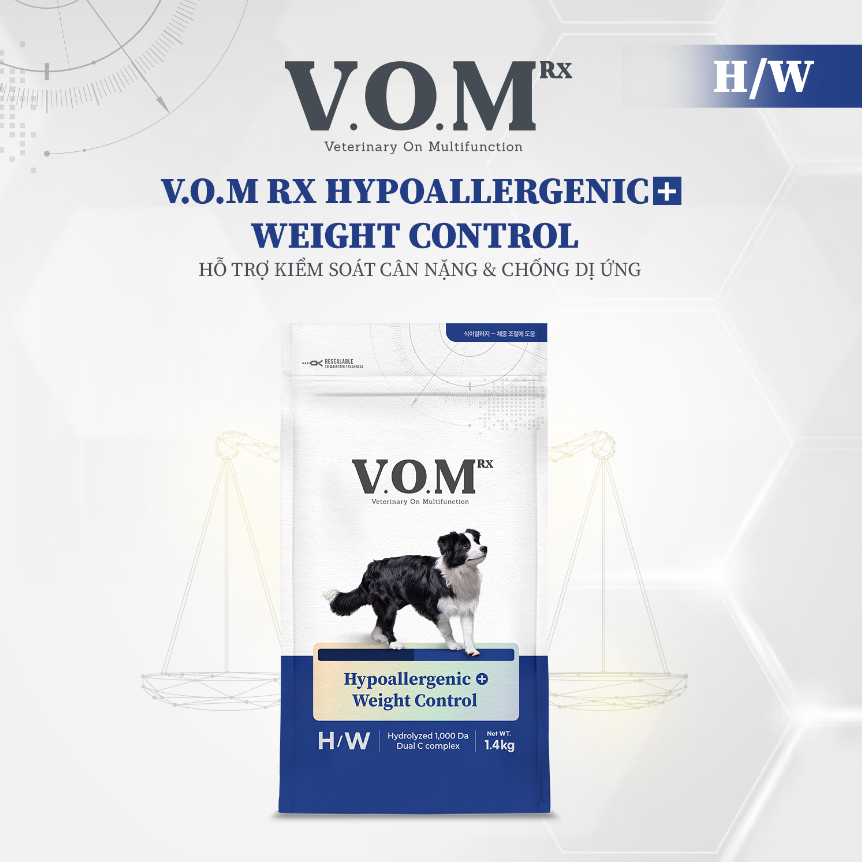
- V.O.M Rx Hypoallergenic & Weight Control: Suitable for allergic dogs that are also overweight. Uses high-quality hydrolyzed protein to reduce the chance of reactions, helping protect the skin and keep the coat glossy. CLA and L-carnitine support weight management, which suits overweight dogs with allergies.
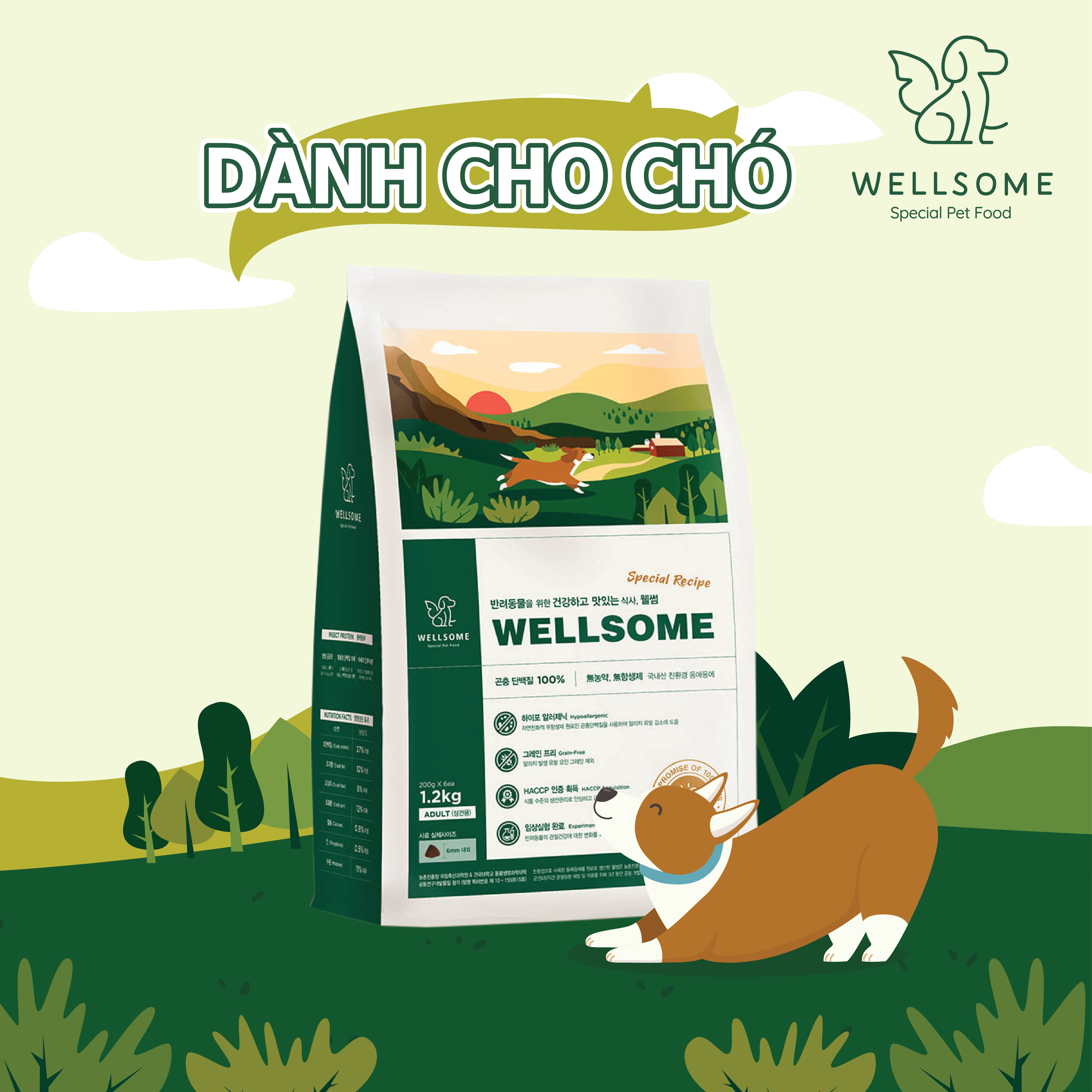
- Wellsome: Suitable for dogs that need to switch to a less common protein source (insect protein). The formula uses insect protein, a protein rarely found in conventional pet food, and is grain-free. It can be considered when your vet recommends switching to a novel protein.
Frequently Asked Questions
Is itchy skin in dogs always caused by food?
Not always. Itchy skin can also be caused by fleas, environmental allergies, bacterial infections or fungus, so you should take your dog to the vet before changing their food.
How long does it take to see improvement after changing an allergic dog’s food?
You need to be patient for at least 8 weeks. After 5 weeks, more than 80% of dogs have improved, and by 8 weeks, more than 90% of dogs with food reactions have improved completely.
Can a blood test identify a food allergy?
Not reliably, because results can be false positives or false negatives. An elimination diet followed by re-introducing the old food is still the standard way to diagnose it.
Is grain-free kibble good for allergic dogs?
Not necessarily. Food allergies in dogs are usually linked to protein sources, so grain-free kibble is not automatically suitable for allergic dogs. What matters more is a protein your dog has never eaten, or hydrolyzed protein, with a short ingredient list.
Does an allergic dog have to eat special kibble for life?
It depends on the dog. Once the allergen is identified, your vet may guide you to switch to a kibble that does not contain it. Do not extend or stop the special food on your own without asking your vet.
Can allergic dogs eat snacks?
Not during the elimination diet, because even a small snack containing an unfamiliar protein can skew the results. Once you have a conclusion, choose snacks that use a protein source that is safe for your dog.
Conclusion
Skin allergies make your dog uncomfortable, but you can help them feel better by taking it step by step: take your dog to the vet to find the right cause, try a hydrolyzed or novel protein kibble for at least 8 weeks, then re-introduce the old food to find out whether your dog is truly allergic. Patience in the early stage will help you choose the right kibble for your dog in the long run.



L-Lysine for Cats: Benefits, Uses & How to Supplement It Safely

Today's dinner: Nutritionally Balanced Kibble for Dogs and Cats

Cat Food: The Definitive Guide to Choosing Dry Kibble

Puppy Food: 7 Key Tips for Choosing the Right Kibble for Your Pup

Hairball Control Cat Food and How to Reduce Hairballs Effectively

FINE Pet Food: Safe for Dogs & Cats, Allergy-Friendly
Is Organic Dog Food Good for Dogs? What You Need to Know
Dog Food: What to Consider When Choosing

What Can and Can’t Cats Eat? A Must-Know List for Cat Owners

Is Catsrang Cat Food Good?

Probiotics for Cats: Prebiotics, FOS, and How to Choose Cat Kibble

Omega-3 for Cats: Benefits, How to Choose, and Recommended Products

Wonder Cats Products and Prices: A Dry Cat Food Guide

Taurine For Cats: Role, Requirements & How To Supplement It Correctly

How Much Dry Food Should You Feed Your Cat? Feeding Portions by Weight

How to Choose Cat Kibble: 7 Key Criteria and How to Read Labels

How to Choose Puppy Food: 5 Things to Check Before Buying

Food for Cats with Kidney Disease